

TV backlights explained: Edge-lit vs. full array vs. Mini-LED
TV backlights explained: Edge-lit vs. full assortment vs. Mini-LED
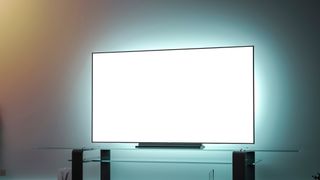
There's an unsung hero in your living room, a piece of technology that has been steadily advancing for years, providing better and amend film quality and more than immersive entertainment, and information technology's i y'all may not even know exists. I'm talking, of class, most the backlight in your TV.
What's a backlight? Well, information technology'due south the light source that is situated directly behind the LCD panel of the majority of TVs. It's what makes the screen glow, what gives vivid colors their vibrancy, and increasingly, what gives nighttime shadows their depth.
Tv backlights have undergone a surprising amount of modify in the last few years, and knowing how this feature works, and what your options are will go a long way in helping you get a meliorate than boilerplate TV for a lower than average cost.
- Tested and reviewed: The best TVs nosotros've seen
- Try the best TV mounts for the Tv you already ain
- Latest: Everything you lot need to know about buying a Television receiver
Basic LCD TV beefcake
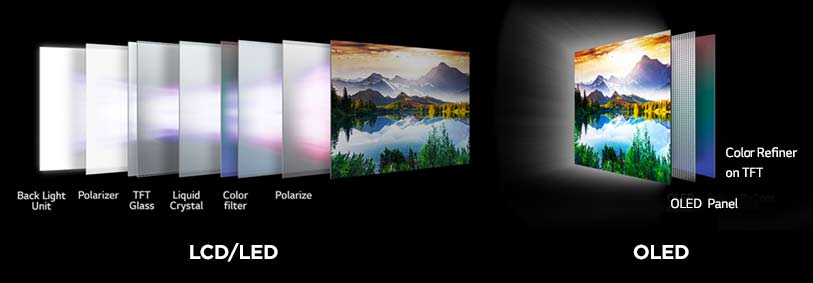
In that location'due south a petty more to the glowing panel of an LCD Tv than you might expect. The LCD panel offers the shape and color components of an image, but it doesn't actually produce any calorie-free of its own. And without light to produce the colors we see and project the image outward to the viewer, an LCD Tv set wouldn't be worth much. Enter the humble backlight.
Behind the LCD console is a backlight, and between the backlight and the LCD panel are usually a few layers of polarized filters, backlight diffusers, and other optical layers designed to plough this collection of tech components into a sharper viewable image.
The details volition vary from one manufacturer or mode to the next, but the fundamentals that that technology is based on remain the same.
You'll have an LCD console to provide much of the image content, and a backlight behind information technology to provide the light that makes that LCD panel visible and the colors vivid. Just that backlight has undergone a lot of changes over time — several merely within recent years. And a lot of the improvements we've seen in modern TVs can be traced to the apprehensive backlight.
A cursory history of TV backlight
For the commencement several decades of consumer TVs, there was no need for a backlight. Cathode ray tube (CRT) engineering doesn't demand i, considering it is a light source unto itself. Plasma screen TVs used the aforementioned sort of phosphorescence that CRTs used, meaning that they were also capable of emitting their ain lite.
Merely with the advent of LCD-based apartment screen TVs, the demand arose for illumination, and originally that meant common cold cathode fluorescent lamps (CCFL), a technology that'south similar to fluorescent and neon lighting. Just because these lamps generate heat that can damage a brandish and aren't terrible energy-efficient, they've pretty much disappeared from today'southward TVs.
Instead, they were replaced past i of the biggest innovations in modern TV engineering science: LED backlighting. With this modify, Television manufacturers started calling LCD TVs with LED backlight "LED TVs" to differentiate them from the older CCFL-lit models. But with the concluding CCFL TVs going off the marketplace a decade ago, information technology'southward only as likely that TV makers have kept the LED nomenclature around to mistiness the distinction between LCD TVs and OLED panels, which employ a very different (and largely superior) display technology.
Since then, LED backlighting has been refined in a number of ways, and there are several options on the market in today'south TVs.
Modern backlighting: Local dimming and HDR
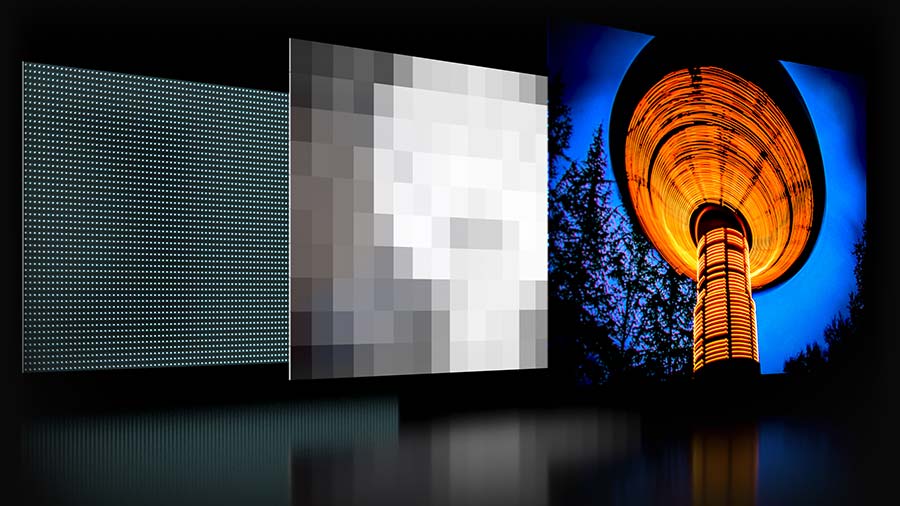
Today'due south TVs use a number of backlighting methods, which we'll hash out beneath, only the biggest alter has been the introduction of discrete backlighting zones. Instead of illuminating the unabridged screen, the LED backlights of a Goggle box can exist addressed individually, meaning that they can exist turned on or off, dimmed or brightened as needed to provide brighter or darker portions of the TV picture.
You may not know much about the innovation of local dimming, but yous've probably heard of the feature information technology enables: High dynamic range or HDR. It's one of the all-time features on today's TVs, and one we recommend paying attention to when shopping for a Telly. (Bank check out our manufactures What is HDR Goggle box, and why does it matter? and What Is Dolby Vision? to acquire more than.)
With local dimming zones allowing variable brightness to different sections of the display, new media includes additional metadata, beyond simple video and sound. This data describes the brightness and backlighting scheme for a given scene or frame of content. While that metadata may fall under different format names, like HDR10 or Dolby Vision, the essentials are the same — describing how those dimmable backlights should comport to produce a richer prototype.
There are different formats with varying degrees of granularity, merely the finish event is that modern media takes this boosted brightness control into account, just every bit it would colour and multi-channel audio.
Merely there's a catch. Not every form of backlight offers the same level of command. As a result, non every Television has the same level of capability, even if it supports the aforementioned HDR formats.
And it all comes downwardly to what type of backlighting is used.
Essential backlight technologies

Edge lit
Edge-lit displays illuminate the LCD console by setting a row of LEDs along the elevation and lesser edges of a screen, or ringing the perimeter of the Idiot box frame with LED lights. This calorie-free is then distributed across the back of the LCD panel with a special diffuser lite guide, a semi-transparent sheet of plastic that allows the light from the LED in the Idiot box bezel to illuminate a larger portion of the display.
Information technology's a very price effective mode to lite a TV, since it uses the least amount of LEDs. It also offers some level of dynamic backlight control for HDR support. On sets that are equipped to do then, portions of the edge lighting strips can be darkened or dimmed to provide deeper blacks, or brightened to accentuate brighter portions of the screen. Nevertheless, since they don't directly light the LCD panel from backside, the outcome is considerably muted when compared to other backlight technologies.
Considering these border-mounted LEDs tin exist individually dimmed or brightened, edge lit TVs can offering some measure of dynamic backlight control for high dynamic range content. This can be done in two ways.

Commencement, the LEDs at the acme and bottom of the display can be dimmed to alter the brightness in a vertical stripe, from the acme to lesser of the display. This divides the brandish into 8-16 singled-out dimming zones.
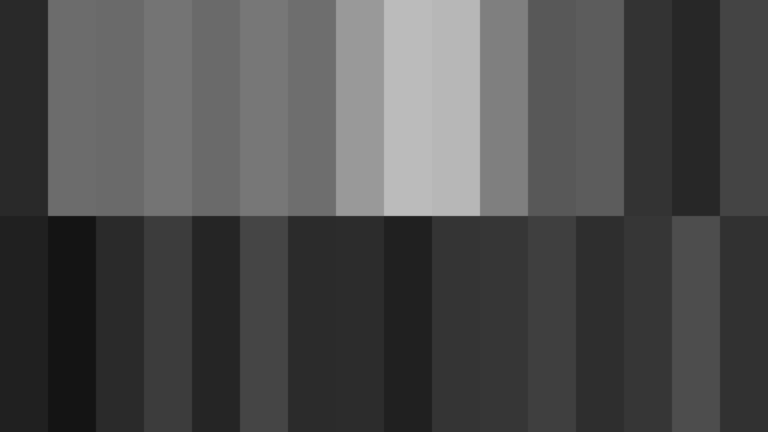
Second, top and bottom rows of LEDs can be dimmed independently, effectively doubling the number of dimming zones.
Both of these methods suffer from the use of broad, lengthened dimming zones, which mute the HDR consequence considerably, and will oftentimes illuminate unwanted portions of the display, an effect chosen haloing.
Dual LED
A variation on border lighting developed past Samsung and used in some Samsung QLED TVs is chosen dual LED. Instead of using a unmarried color backlight for the TV, Samsung uses a combination of cool blue and warm yellow LED lights, and alternates between them based on the content of the scene to offer a pocket-sized improvement in picture quality.
Directly lit LED
Direct lit LED backlighting uses LED lighting beyond the dorsum of the TV, directly backside the LCD panel, providing a fairly uniform amount of light beyond the screen. It as well allows for a brighter pic, since it uses more LEDs, and is able to utilize more of the light coming from those LEDs.
However, an all-white back light lonely has its limitations. Considering the entire LCD panel is lit uniformly, in that location's niggling to no dynamic range offered by the display.
One common trouble caused by this compatible backlight approach is that darker portions of the display are still illuminated, resulting in black portions of the screen appearing grey, a phenomenon called "elevated black levels." It's specially noticeable on letterboxed movies, which will have a distinct unwanted glow in the blackness bars above and below the motion picture.
Full assortment with local dimming (FALD)
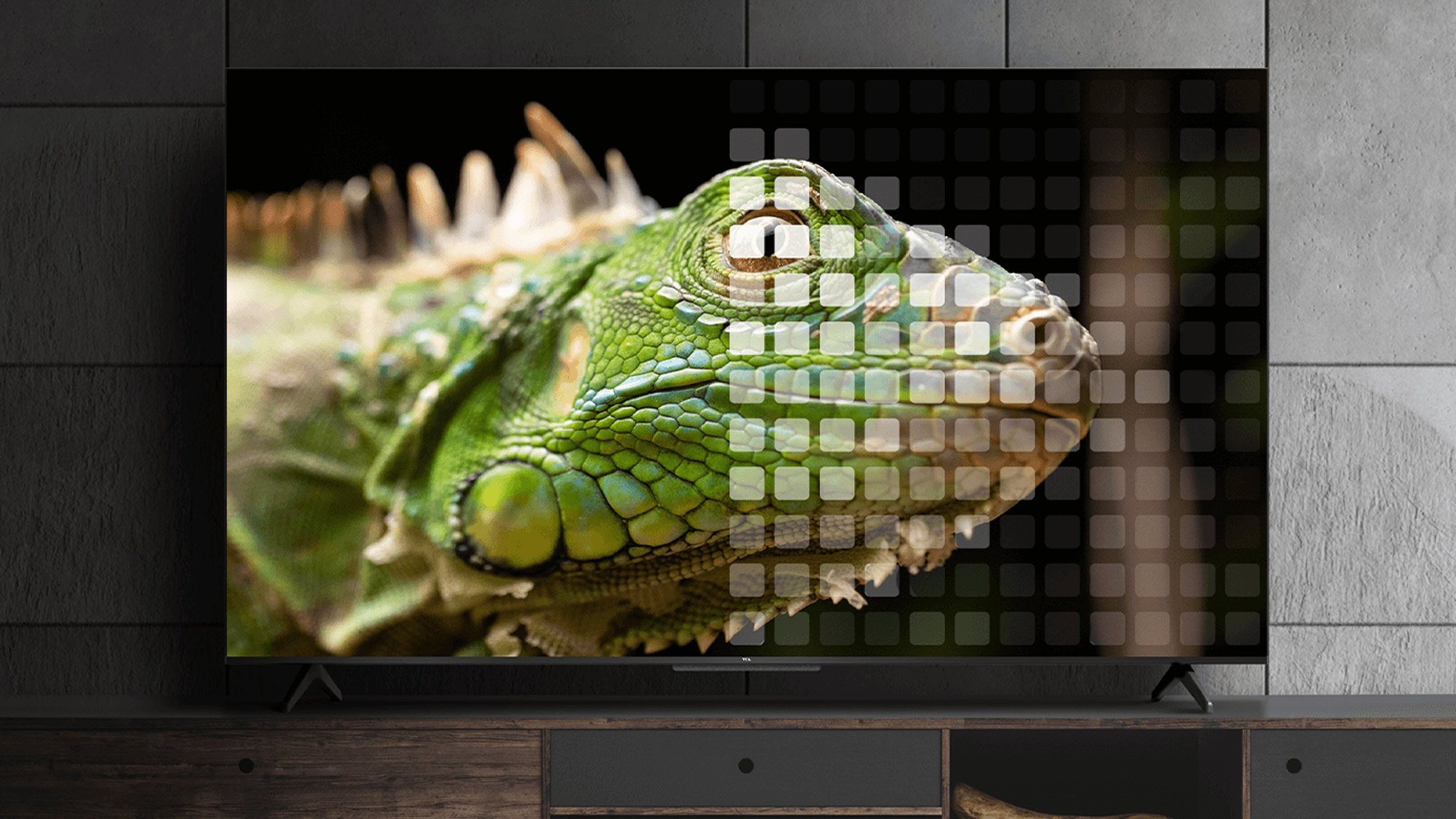
The next refinement for LED backlight is total array backlight with local dimming. This breaks upwardly the backlight array of direct LED lighting, and separates information technology into multiple zones. These zones each illuminate a portion of the screen, and can be individually brightened or dimmed depending on the content in that section of the display.

This dynamic backlighting allows a Idiot box to deliver deeper shadows, brighter highlights, and more vivid colour. If you'll forgive the pun, this is where HDR content actually shines.
Local dimming zones have become fairly common on TVs across the price spectrum, and more premium TVs take differentiated themselves by offering a greater number of backlighting zones with smaller, more tightly controlled light, which can minimize light blooms and haloing to provide better HDR performance and contrast.
Mini-LED
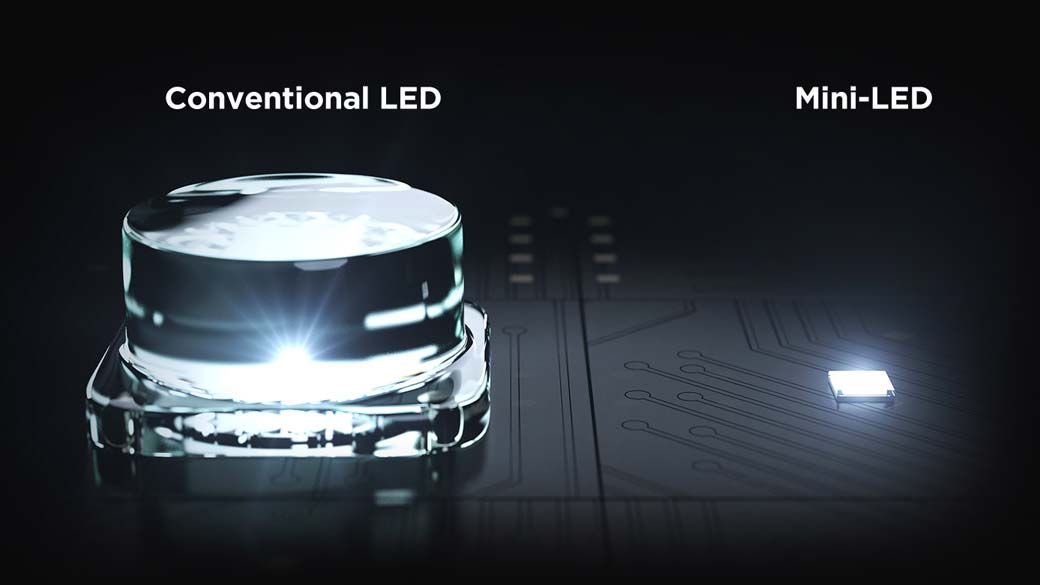
Local dimming has been farther refined with the introduction of mini-LEDs. Past shrinking the LED size downward to about one-fifth the size – mini-LEDs mensurate 0.008-inch (200 microns) beyond – more LEDs can be packed into the backlight panel, and much smaller dimming zones to be used.
Where a standard LED backlight offers dozens of backlighting zones, mini-LED offers hundreds, and individual mini-LEDs tin number in the thousands for a larger TV. More LEDs translate into brighter backlight, for a brighter more vivid pic, besides equally smaller lighting zones to reduce haloing.
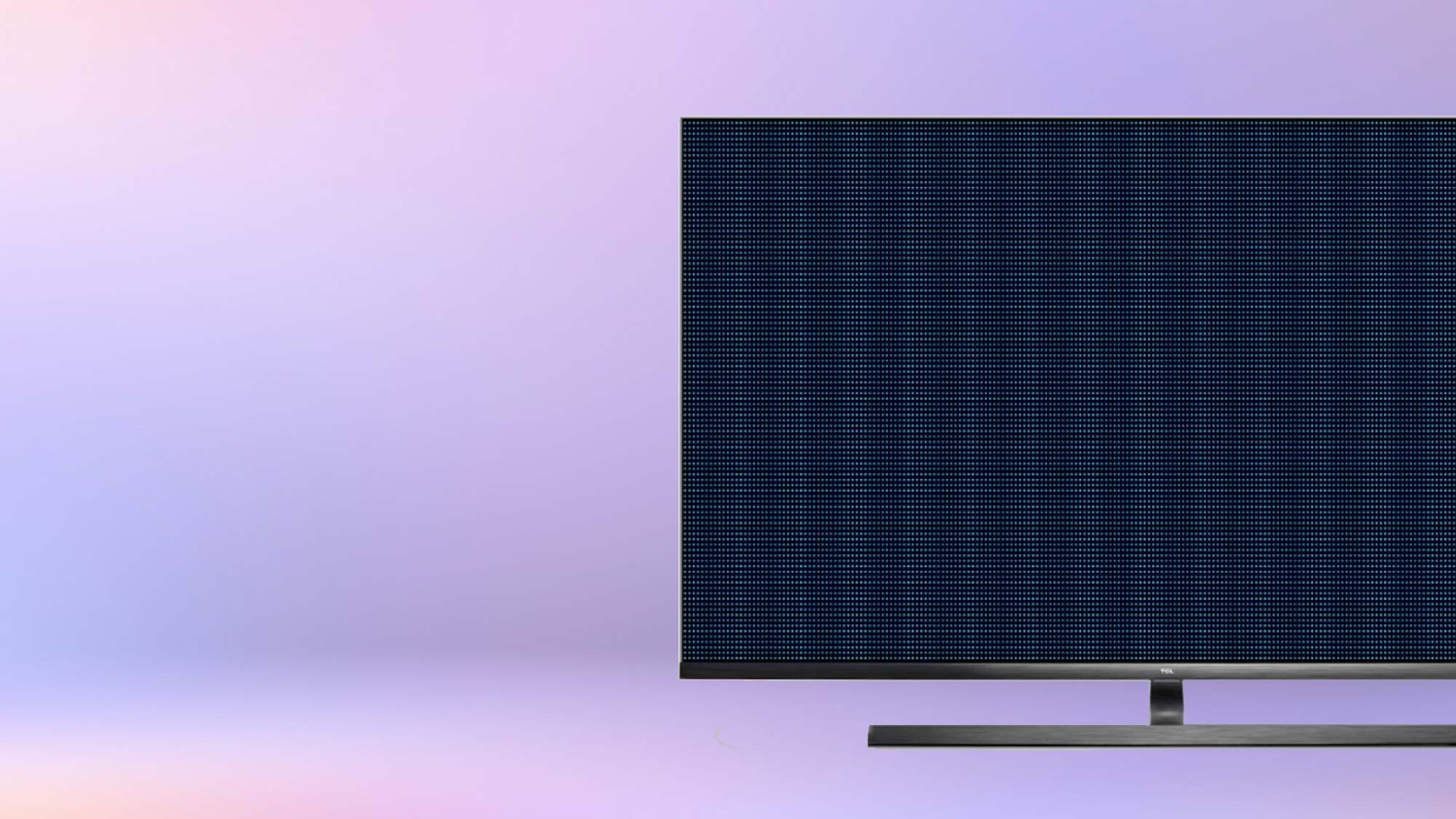
The result is even more granular command of the backlight, with performance improvements in both overall dissimilarity and HDR performance.
Models from Samsung, TCL, and LG all employ mini LED backlighting for its superior functioning, and the combination of mini-LED and QLED color enhancement offers some of the all-time Idiot box flick quality that'southward ever been available.
Learn more most mini-LED engineering science in our article Year of the mini-LED Television receiver: Samsung, LG and TCL getting this huge upgrade.
Per-pixel lighting
Ultimately, the best backlight is no backlight at all. This can be achieved in ane of 2 ways: With electric current OLED displays or micro-LED engineering, the latter of which isn't withal available to regular consumers.
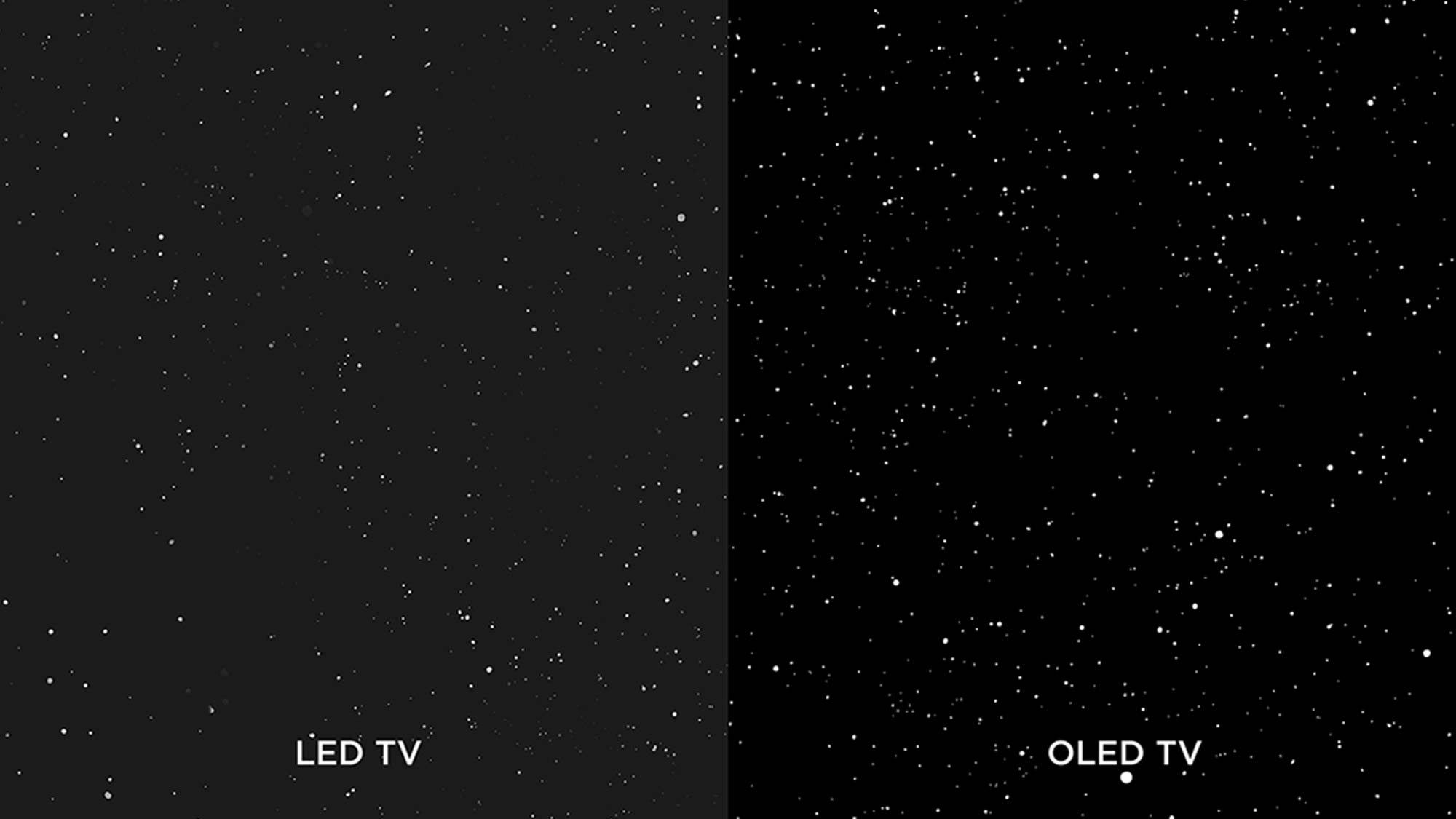
OLED displays have individual pixels that light upward without the need for a separate illumination source, creating a self-emissive display panel that doesn't need any sort of backlight.
Because illumination tin be controlled at the level of individual pixels, OLED applied science offers the highest level of contrast and HDR performance, with no light blooming, and true black reproduction as individual pixels go dark.
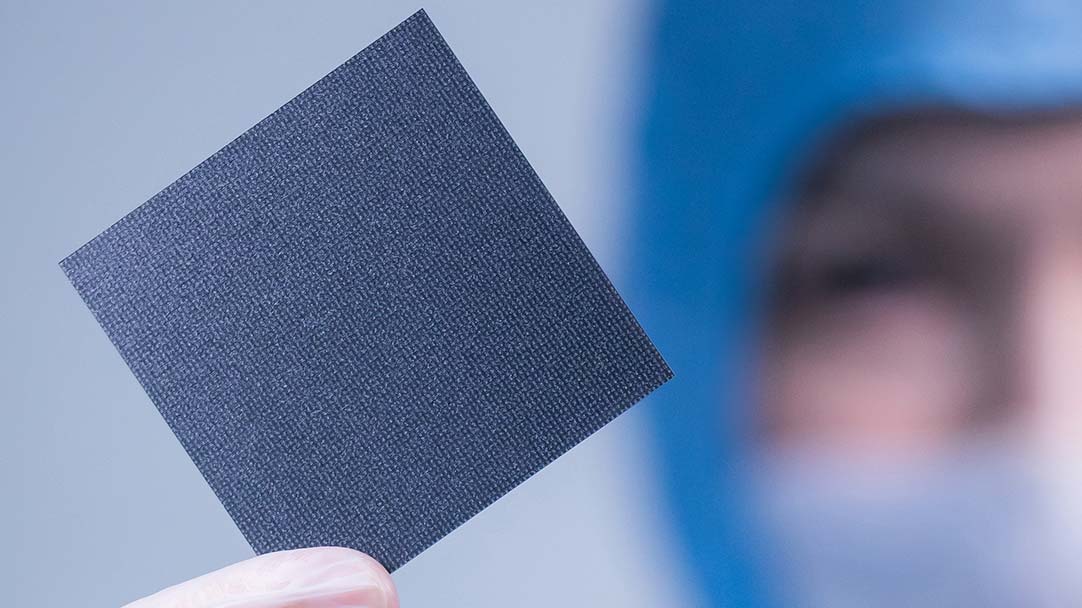
Shrinking mini-LEDs down even smaller, you go micro-LED. Measuring as small as 50μm — nearly 0.002 inches beyond — micro-LEDs are ane/100th the size of a conventional LED. That's small enough to cluster them together for individual pixels, creating another form of self-emissive brandish. The showtime micro-LED TVs are on sale at present, but with prices in the tens of thousands of dollars, they're non really something the average consumer would even consider.
You can get a more detailed caption of mini-LED engineering in our guide Micro-LED vs. Mini-LED: What's the departure? or read Micro-LED vs. OLED TV: Which TV tech will win? to run across how the two leading cocky-emissive technologies compare.
TV backlighting: What it means for you
All of this information is very interesting (at least, to some of us TV nerds), but you're probably wondering what this really ways for you.
The lesser line is pretty unproblematic: Better backlight will translate into amend picture show quality.
- Edgelit and directly backlight - Good
- Full assortment with local dimming - Amend
- Cocky-immissive displays - Best
Just there'southward more than i mode to approach full array with local dimming, because TVs will offer unlike numbers of dimming zones and local domain can be achieved with either standard LEDs or mini LEDs.
The rule of pollex here is simple: More backlighting zones are better, and many LED gives yous the most backlighting zones.
And there'south a direct relationship between backlight quality and TV price, so what is the best option when you don't want to pay an actress $1,000 for the category-leading quality of OLED – even the affordable Vizio OLED TV is $one,199 – or shell out tens of thousands for a giant micro-LED Television set?
For most people, we recommend looking for a TV with mini-LED, like the Editor'southward Selection Samsung Neo QLED QN90A, or the more affordable TCL 6-Series Roku TV (R635). Mini LED backlighting hits the sweet spot for affordability and improved backlight functioning. If you want meliorate than average backlight control without spending the extra coin for an old TV, a mini LED TV is the way to become.

Source: https://www.tomsguide.com/reference/tv-backlights-explained-edge-lit-vs-full-array-vs-mini-led
Posted by: brillshert1979.blogspot.com
0 Response to "TV backlights explained: Edge-lit vs. full array vs. Mini-LED"
Post a Comment